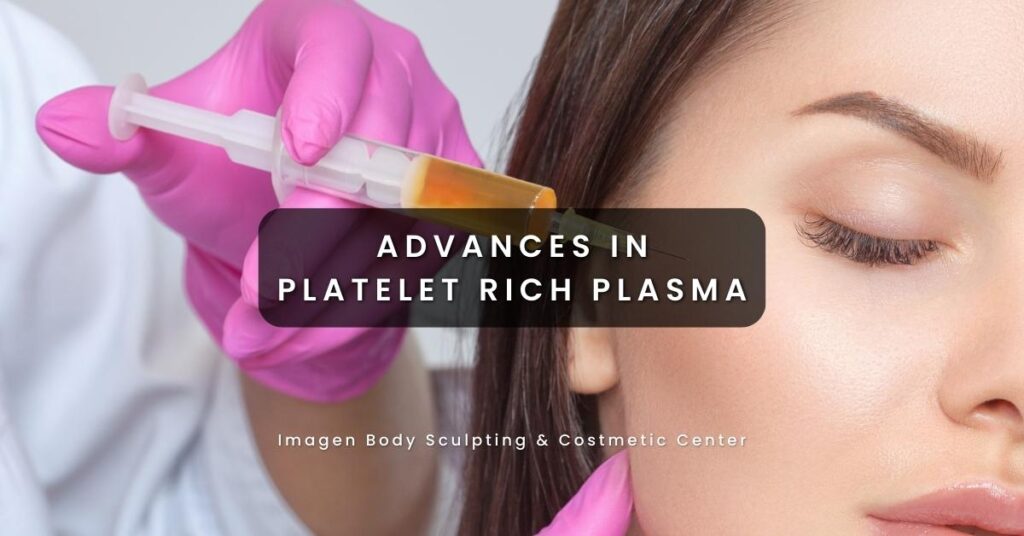
Maybe the solution to your uneven skin texture, sun spots and premature wrinkles is actually inside of you? Platelet Rich Plasma (PRP) is a type of therapy that uses both your plasma (the liquid component of blood) and platelets (the key blood cells that form clots and stop bleeding) to stimulate collagen growth for skin and hair and tightens skin.
During a PRP treatment, a small amount of blood is drawn and then spun in a centrifuge to isolate the platelets and plasma from the other cells. The PRP is then injected into the areas where you desire rejuvenation such as your face, scalp or even intimate vaginal or penile area. Since the PRP is harvested from your own blood, there are no risks of allergic reaction or rejection.
Why is PRP good for skin?
Platelet Rich Plasma (PRP) was first used clinically in 1987 and since that time its use has exploded! It is used extensively in orthopedics, where it has been used to improve the condition of an injured joint when injected into the joint.
Platelet Rich Plasma contains growth factors that give it healing properties. The PRP is stimulated through contact with collagen or injured tissue, so when it is combined with microneedling or laser resurfacing the results are even more extensive. The platelets help to form a scaffold on which new collagen can be built and the growth factors help to heal and rejuvenate the skin. Facial PRP injections can improve fine lines, thinning skin, hair rejuvenation, and sun damage. This treatment has been known as the “vampire facial” in the media and has become more popular over the years for skin rejuvenation and collagen stimulation.
The healing properties of PRP can be used to rejuvenate the skin as well. PRP has been used in Cosmetic Surgery applications since 2005. There are multiple methods of applying or injecting the PRP and it can be used in combination with other therapies as well.
PRP can be injected alone under the skin to rejuvenate the overlying areas. This is generally done in areas of fine lines, acne scars or sun damage.
PRP can also be combined with microneedling. In this procedure the PRP is applied topically to the skin and then pushed in with the microneedle roller. The addition of the the microneedling produces tiny micro channels that release factors that activate the growth factors in PRP.
What does PRP help treat?
If you have deeper lines or volume loss, the PRP can be combined with traditional fillers (such as Juvéderm or Voluma) or with your own fat, harvested from a site such as your abdomen. In this procedure the filler is used to give the needed volume and then the PRP helps to build a scaffold and increase collagen production to make the results longer lasting. Fillers alone generally give results that last up to 6 months. Fillers combined with PRP can give results lasting as long as 18 months.
The results of the PRP injection alone do take a few weeks to appreciate, so if you’re looking for a faster fix you may want to consider Botox or Juvéderm in combination with the PRP
Can I combine PRP with Microneedling?
While PRP alone has many benefits on its own, when it is used in conjunction with microneedling it allows for deeper distribution of the platelet-rich plasma helping facial rejuvenation, combining microneedling with PRP treatment maximizes the collagen production and wound healing responses of the body, helping the body’s ability to create healthy, supple skin.
Microneedling which is also known as collagen induction therapy is the process of puncturing the skin repeatedly with tiny needles. The purpose of this treatment is to generate new collagen and skin tissue to promote smoother, firmer, and improved skin tone. Microneedling is mostly used on the face and may treat various scars, fine lines and wrinkles, skin texture, and large pores.
Is Microneedling with PRP better?
When combined together, this treatment maximizes the collagen production and wound healing responses of the body, helping the body’s ability to create healthy, supple skin.
Thanks to the micro-punctures into the dermis created by a microneedling treatment the skin can allow the rejuvenating components of PRP deeper into the skin. PRP is like to stem cell therapy in that both can regenerate damaged tissues, but PRP is particularly useful for rejuvenating skin surrounding acute injuries, such as the micro-injuries created by a microneedling device. PRP is an incredible tool when it comes to the promotion of cell growth and skin tightening. Many patients can reduce the appearance of acne scarring or fine lines with fewer treatments via PRP microneedling than via microneedling alone, but of course, Dr. Green will work with you to determine which procedure will be best for your needs.
As Dr. Frank explains, “For PRP to work it needs to be delivered to where collagen and elastin are made so that is we inject it and apply it topically. It may cause more bruising and swelling but the treatment is more effective and delivers optimal results.”
PRP for Hair Loss or Thinning Hair

Hair loss or hair thinning can be combatted with PRP injections to rejuvenate the scalp and encourage new hair growth! Not only that, the PRP injections createan increased blood supply to the scalp which helps grow more robust hair follicles increasing hair thickness.
During a PRP treatment, a small amount of blood is drawn and then spun in a centrifuge to isolate the platelets and plasma from the other cells. The PRP is then injected into the areas where you desire hair and scalp rejuvenation. Injection of PRP into the scalp helps to awaken dormant hair follicles, leading to the production of new hairs. It also slows hair loss and improves color and brightness. It can be combined with micro needling of the scalp, topical hair loss treatments and low level lasers for hair stimulation.
 Jennifer Tighe de Soto, MD is a cosmetic surgeon who is board certified through the American Academy of Aesthetic Medicine. For more advice from Dr. de Soto on body sculpting and other aesthetic treatments please visit www.omahaliposuction.com where you can read her blog and see before and after photos of actual patients.