Embarrassed by Hair Loss?
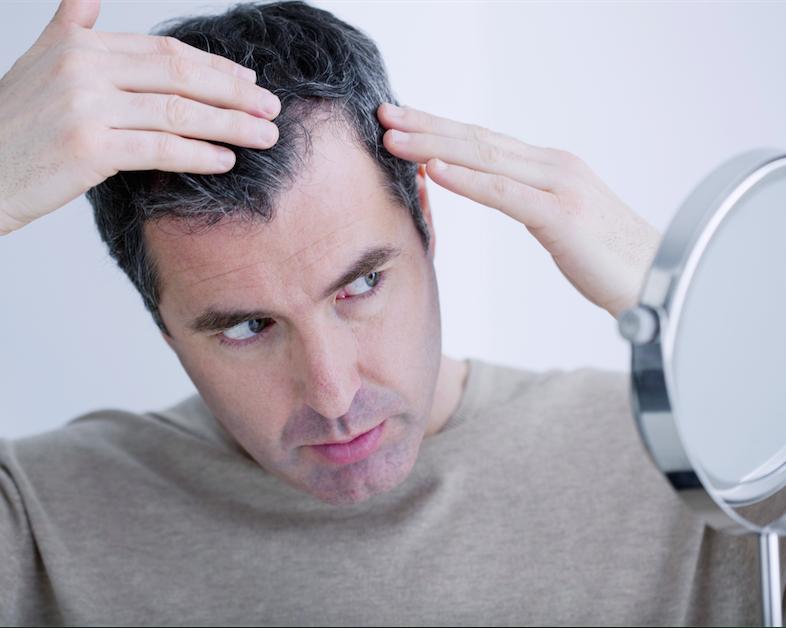 Hair loss is a frequent problem for both men and women as we age. Thinning hair can make us look older than we are and can be embarrassing. The Internet is full of “Miracle Cures” for hair loss, but most of them fall short of expectations. That being said, there have been significant scientific advances in the area of hair loss, some of them sounding so sci-fi that they could have come straight out of Hollywood!
In the past, the main treatments for hair loss were cosmetic coverage (toupees or wigs) or strip hair transplant. Cosmetic coverage continues to be an option (there are sprays that can give you the appearance of fuller hair, extensions for men and women and full on wigs), though many of our patients are looking for a more permanent solution *.
Non-Surgical Hair Loss Treatments
In the non-surgical arena of hair loss treatment, most physicians start with topical minoxidil (Rogaine) with or without oral finasteride (Propecia) for men or oral spironolactone for women. All of these can help decrease the hair loss and lead to some regrowth. Minoxidil needs to be used twice a day for optimal results and finasteride/spironolactone must be taken every day. The cessation of either of these treatments will lead to the loss of any hair growth that was retained/stimulated. The pills can also have significant side effects, such as decreased libido and sexual dysfunction.
 Some of the newer advances in medical hair loss treatment include Laser Combs/Caps and PRP injections. Laser Combs/Caps emit low-level laser energy, which leads to stimulation of the hair follicles. The HairMax Laser Comb and LaserCap are FDA approved to treat hair loss in both men and women. Platelet Rich Plasma (PRP) injections are gaining popularity in treating hair loss. PRP is a component of your own blood, which is collected and then processed to isolate the platelets and the serum, which contains the healing and growth factors in the blood. The PRP is then reinjected with a tiny needle into the scalp. PRP, when injected into the scalp, increases the blood flow to the hair follicles, decreasing hair loss and stimulating the follicles to increase growth. The results can be appreciated after just one session and generally last for 3 to 6 months. Maintenance injections three to four times a year are recommended to make sure that your new hair growth does not fall out. PRP can also be combined with microneedling, which can further help to stimulate hair growth.
Surgical Hair Loss Treatments
Hair transplant continues to be a staple in the treatment of hair loss, both for men and for women. Technical advances in robotics have significantly improved the harvesting process, eliminating the linear scars that come with strip harvesting. Follicular Unit Extraction removes tiny sections of the scalp. Each section contains 1-2 follicular units and each follicular unit contains 1-4 hairs. These tiny sections of scalp are then reimplanted in areas of thinning hair. More invasive procedures, such as scalp reduction, can also be performed in cases of large areas of balding, though this procedure does leave a large scar.
The lesser invasive hair loss treatments are best started early in the balding process, while there are still active follicles which can be stimulated. When there are significant areas with no hair, transplant may be your only good option to provide scalp rejuvenation.
 Jennifer Tighe de Soto, MD is a cosmetic surgeon who is board certified through the American Academy of Aesthetic Medicine. For more advice from Dr. de Soto on body sculpting and other aesthetic treatments please visit www.omahaliposuction.com where you can read her blog and see before and after photos of actual patients. If there’s a topic you would like to see us cover in a blog, please Contact Us.